Rice University's premier undergraduate journal of scholarship in domestic and international policy.
Search
The Resounding Warning of Japanese Internment Camps for Latin Americans
Poema Sumrow
Mar 30
6 min read
By: Poema Sumrow
Last Updated: December 2025
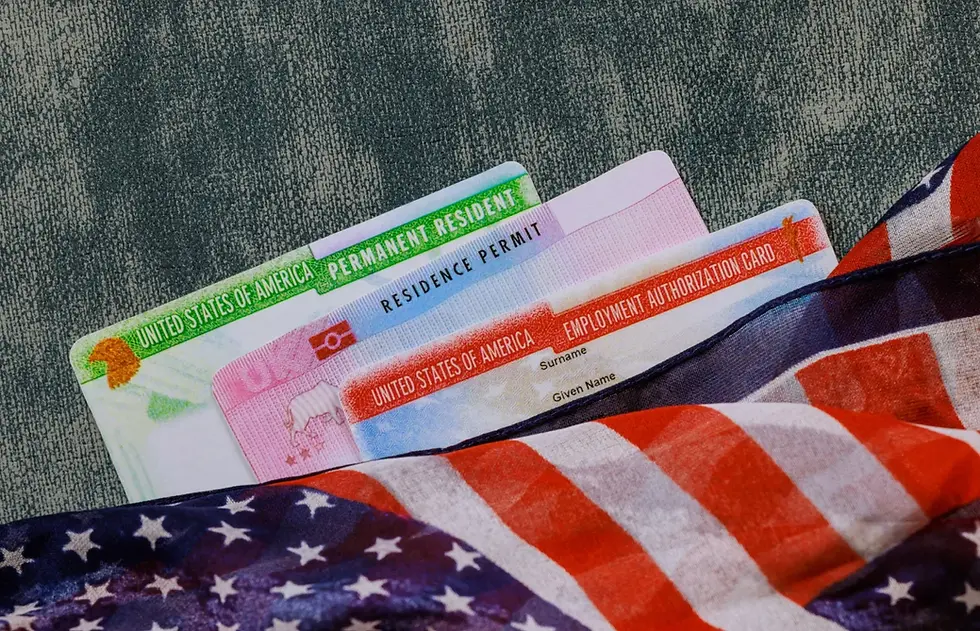
Photo by Daniel Torok/Florida Pheonix
Introduction and Historical Background
The legal architecture that enabled the mass incarcerations of Japanese Americans during WWII has reemerged during the second Trump administration. World War II was a time of great hostility towards Americans of Japanese descent. Following the attack by the Japanese air force on Pearl Harbor in 1941, the Roosevelt Administration escalated racist and xenophobic stereotypes about Japanese-Americans, framing them as enemies of the state. Executive Order 9066, signed by FDR in 1942, called for the immediate removal of nearly 120,000 Japanese Americans living in the Western United States (Exec. Order No. 9066, 1942). Japanese Americans were moved to “internment” camps, which mirrored concentration camps in all but name, and on average, were held captive between 2 and 4 years, despite two-thirds being American citizens. The order wasn’t lifted until 1944 when the U.S. War Department issued Public Proclamation No. 21. Even with this legislation, the last camp, located in Tulelake, California, did not close until March of 1946, well after WWII’s end (Proclamation No. 21, 1944). This decision followed the Supreme Court case Ex Parte Mitsuye Endo which stated the U.S. federal government had no grounds to detain a loyal U.S. citizen (Ex Parte Endo, 1944). Alarmingly, but unsurprisingly, the same exclusionist policies that isolated and oppressed Japanese Americans left German-Americans and Italian-Americans significantly less targeted, despite the United States being at war with both Germany and Italy, as well as with Japan (George, 2022). The lengths to which the federal government went to dehumanize Japanese-Americans reflects how salient racial bias lives within the legal frameworks of American immigration policy.
In the current U.S. political climate, the Trump administration relies on these same unconstitutional uses of exclusionary executive orders to unlawfully detain and imprison minority groups and immigrants simply on the basis of racial profiling. It is incumbent upon elected representatives to methodically target and eliminate the Alien Enemies Act in order to safeguard the due process that all people on American soil, including Latine migrants, are entitled to receive.
Current Uses of the Alien Enemies Act
Just as FDR used wartime justification to suspend civil liberties during WWII, the Trump Administration has followed a similar script, invoking threats rooted in racial bias to justify apprehension and deportation. In March of 2025, President Trump first invoked the Alien Enemies Act, claiming its usage necessary to combat the “irregular warfare” perpetrated by a Venezuelan gang, Tren de Aragua (Sherry & Kaste, 2025). Two months later, the Trump administration formally ended CHNV, a program designed to grant Cubans, Haitians, Nicaraguans and Venezuelans parole in the United States to circumvent involuntary migrants out of the region (Totenberg, 2025). These two acts, as well as all other exclusionary immigration policies of Trump’s second term, are stark examples of Trump’s nativist policies and their intersection with immigration. In the case of Tren de Aragua, immigration authorities rely heavily on appearances, most notably clothing and tattoos, to identify gang members and summarily apprehend them, which is followed by a streamlined process in which federal authorities bypass the court system to unlawfully deport suspects (Arango et al, 2025). In reality, Tren de Aragua’s presence in the United States is much less prominent than the Trump Administration would have their supporters believe. White House briefings announcing the invocation of the Alien Enemies Act beg for an emotional response, using language like “invasion,” “infiltrate” and “warfare” to manufacture a sense of urgency that targets members of a specific ethnic group, despite any evidence that their presence signifies criminal behavior (Proclamation No. 10903, 2025).
Ultimately, it is largely due to the racialization and villainization of Latine Americans that President Trump was so successful in his first campaign; his administration monopolized on “moments of supposed crisis” to add force to already draconian policies opposing Latine Americans. By aligning himself with this xenophobic rhetoric, President Trump assumed the role as the defender of those opposed to diversity and change (Canizales & Vallejo, 2021). Similar to how FDR’s Administration instilled fears of Japanese-Americans into the United States which yielded fortified and legitimate discriminatory policies, the Trump Administration threatens to push back against constitutional jurisprudence by invoking the same policies. Showing a clear disregard for constitutionality, and seeing as President Trump has already invoked the Alien Enemies Act to deport Venezuelans with unconfirmed allegiance to Tren de Aragua, it is clear that “enemies of the state” finds whatever meaning best serves the Trump administration’s policy goals.
Legal Basis for Japanese Imprisonment
The sweeping actions of the Roosevelt administration were not merely the product of wartime panic but were grounded in a long-standing legal framework, most notably the Alien Enemies Act, which provided key statutory authority for Executive Order 9066 and thus the mass incarceration of Japanese Americans. The Alien Enemies Act allows the federal government to “apprehend, restrain, secure and remove” any person of an ‘enemy’ nation during wartime without due process. Passed during a Federalist Congress in 1798, the Alien and Sedition Acts were a series of four laws meant to stop foreign nationals from rising up against the U.S. government and fighting for their own countries of origin during wartime (Densho, 2015). Three of the four laws expired by 1802, but the Alien Enemies Act endured. During WWII, FDR’s administration pulled language directly from the Alien Enemies Act to issue Proclamation 2525 which determined that Japanese nationals living in the U.S. be deemed enemies to the state (Proclamation No. 2525, 1941). 10 weeks later, FDR signed Executive Order 9066 into law, which broadened the scope of Proclamation 2525 and based the designation of ‘enemy of the state’ solely on ethnic background rather than proven affiliation or intent. Lieutenant General John L. DeWitt, notorious for leading unjust incarcerations and forced removals of Japanese-Americans to internment camps, argued that regardless of how “Americanized” second- and third-generation Japanese Americans had become, their racial strains were “undiluted” and thus, labeling them as enemies of the state was of sound and unquestionable reason (Nagata, 2015).
Connection to Current Immigration Climate in the US
The largely contested actions of the U.S. government in carrying out internment camps against Japanese Americans were made possible because of the Alien Enemies Act. Those same actions that were deemed immoral and harmful enough to require reparations and formal government-issued apologies are being used today, to fulfill the mass deportation campaigns of the Trump presidency. It is clear, both by scholarship and new legal precedent, that the Alien Enemies Act has been historically instrumental in oppressing out-groups in the United States and the same goes for the Venezuelan Americans being targeted by the current administration. How effective were the reparations towards Japanese Americans if the same methods of oppression are being utilized against Latine communities today? The future of Latine Americans is under siege and requires immediate action.
The Neighbors Not Enemies Act, originally presented by Sen. Mazie Hirono and Rep. Ilhan Omar during the 117th Congress, was reintroduced in February of 2025 and seeks to repeal the Alien Enemies Act completely (H.R.630, 2025). Eliminating the xenophobic, antiquated law will be a step towards safeguarding immigrants’ rights by creating stronger pathways towards due process for Latine people on American soil.
The views expressed in this publication are the authors' own and do not necessarily reflect the position of The Rice Journal of Public Policy, its staff, or its Editorial Board.
Brooks, Roy L. “23 Executive Order 9066: Authorizing the Secretary of War to Prescribe Military Areas.” When Sorry Isn’t Enough, New York University Press, 1 June 1999, pp. 169–70. http://www.jstor.org/stable/j.ctt9qg0xt
Nagata, Donna K., et al. “Processing Cultural Trauma: Intergenerational Effects of the Japanese American Incarceration.” Journal of Social Issues, vol. 71, no. 2, June 2015, pp. 356–70.




Comments